Pass ServiceNow Certifications Exam in First Attempt Easily
Latest ServiceNow Certification Exam Dumps & Practice Test Questions
Accurate & Verified Answers As Experienced in the Actual Test!
- CAD - ServiceNow Certified Application Developer
- CAS-PA - Certified Application Specialist - Performance Analytics
- CIS-APM - Certified Implementation Specialist - Application Portfolio Management
- CIS-CPG - Certified Implementation Specialist - Cloud Provisioning and Governance
- CIS-CSM - Certified Implementation Specialist - Customer Service Management
- CIS-DF - Certified Implementation Specialist - Data Foundations (CMDB and CSDM)
- CIS-Discovery - Certified Implementation Specialist - Discovery
- CIS-EM - Certified Implementation Specialist - Event Mangement
- CIS-FSM - Certified Implementation Specialist - Field Service Management
- CIS-HAM - Certified Implementation Specialist – Hardware Asset Management
- CIS-HR - Certified Implementation Specialist - Human Resources
- CIS-ITSM - Certified Implementation Specialist - IT Service Management
- CIS-PPM - Certified Implementation Specialist - Project Portfolio Management
- CIS-RC - Certified Implementation Specialist - Risk and Compliance
- CIS-SAM - Certified Implementation Specialist - Software Asset Management
- CIS-SIR - Certified Implementation Specialist - Security Incident Response
- CIS-SM - Certified Implementation Specialist - Service Mapping
- CIS-SPM - Certified Implementation Specialist - Strategic Portfolio Management
- CIS-TPRM - Certified Implementation Specialist - Third-party Risk Management
- CIS-VR - Certified Implementation Specialist - Vulnerability Response
- CIS-VRM - Certified Implementation Specialist - Vendor Risk Management
- CSA - ServiceNow Certified System Administrator
Complete list of ServiceNow certification exam practice test questions is available on our website. You can visit our FAQ section or see the full list of ServiceNow certification practice test questions and answers.
ServiceNow Certification Practice Test Questions, ServiceNow Exam Practice Test Questions
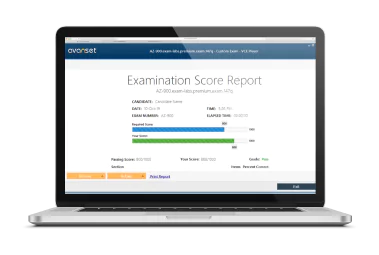
With Exam-Labs complete premium bundle you get ServiceNow Certification Exam Practice Test Questions in VCE Format, Study Guide, Training Course and ServiceNow Certification Practice Test Questions and Answers. If you are looking to pass your exams quickly and hassle free, you have come to the right place. ServiceNow Exam Practice Test Questions in VCE File format are designed to help the candidates to pass the exam by using 100% Latest & Updated ServiceNow Certification Practice Test Questions and Answers as they would in the real exam.
ServiceNow Certifications in 2026: CSA, CAD, CIS Specializations and Maintenance
ServiceNow’s credential ecosystem is broad because the platform itself spans administration, application development, IT service management, customer service, HR workflows, asset management, security operations, governance, portfolio management, field service, discovery, and other enterprise workflows. In 2026, the most important planning distinction is between foundational platform capability and product-specific implementation capability. The Certified System Administrator (CSA) establishes the platform-administration foundation, the Certified Application Developer (CAD) moves toward building applications, and Certified Implementation Specialist credentials validate depth in particular products or solution areas.
ServiceNow also distinguishes mainline certifications from other credential types such as micro-certifications, accreditations, and expert programs. Mainline credentials require ongoing maintenance as the platform changes. That matters when planning a certification path: earning the exam is not the end of the relationship. A candidate needs enough platform use to keep new releases, changed interfaces, and evolving product capabilities connected to real work.
CSA is the platform foundation for most technical paths
The January 2026 CSA blueprint describes an exam focused on configuring, implementing, and maintaining the ServiceNow platform. ServiceNow recommends practical exposure to administration and states that three to six months of experience using or maintaining an instance is helpful. The current blueprint covers platform navigation, instance configuration, collaboration features, self-service and automation, database management and platform security, and data migration and integration.
This scope explains why CSA is more useful when prepared through a personal developer instance or an authorized learning environment rather than screenshots alone. Candidates should create and modify tables, forms, lists, filters, notifications, access controls, imports, catalog items, workflows, and other platform objects. They should understand what a configuration changes, where it is stored, how it affects users, and what security boundary applies.
CMDB and CSDM knowledge also appears in the platform foundation because ServiceNow is often used to connect services, configuration items, operational work, and business context. The article on configuration management in ITSM adds useful conceptual depth: trustworthy configuration data matters because incident, change, service, asset, and operational decisions depend on understanding what exists and how it relates.
CAD is for people who build behavior on the platform
Administration and development overlap in ServiceNow, but they are not the same job. A developer needs to understand the platform’s data model, application scope, scripting, APIs, security, user experience, automation, source control and deployment practices well enough to extend the platform without creating brittle customizations. CAD is therefore a logical next step for people who create scoped applications, automate business logic, or integrate ServiceNow with other systems.
The strongest preparation starts with a small application. Define a real business object, create the data model, configure forms and lists, establish roles and access controls, build automation, add validation, and expose appropriate user interactions. Then test what happens for different personas. A solution that works for an administrator but fails for an ordinary user is not complete.
Developers also need restraint. ServiceNow provides configuration, low-code tools, scripting, integration services, and extension points; choosing the least complex mechanism that meets the requirement generally improves maintainability. Certification study should build judgment about when to configure, when to script, when to integrate, and when a requirement should be challenged because it will create unnecessary technical debt.
ITSM and data foundations connect workflow to trustworthy service information
For professionals implementing incident, problem, change, request, knowledge, and related service-management processes, CIS-ITSM is one of the most recognizable implementation-specialist paths. It is valuable because implementation work is not simply enabling modules. Teams have to translate process requirements into roles, states, workflows, service-level behavior, approvals, notifications, data structures, and reporting that users can operate consistently.
Data quality becomes especially important as implementations mature. CIS-Data Foundations focuses on CMDB and Common Service Data Model concepts, while CIS-Discovery goes deeper into discovering infrastructure and populating configuration information. These areas are related but should not be collapsed into one topic: data foundations concern the structure and governance of service/configuration data; Discovery concerns the mechanisms and patterns used to identify infrastructure and collect data.
Hands-on practice should include defining ownership and data-quality rules, not just running discovery. Ask which team is accountable for each class of configuration item, how duplicates are identified, which sources are authoritative, how relationships are maintained, and what happens when an automated source conflicts with manual data. A technically successful discovery schedule can still produce a poor CMDB if governance is weak.
Customer, HR and field workflows demand domain-specific implementation skill
ServiceNow extends beyond internal IT. CIS-Customer Service Management addresses customer-service workflows, where cases, accounts, contacts, entitlements, knowledge, service information, and routing must support external or customer-facing operations. The design questions differ from internal ITSM because organizations may need to represent customer organizations, products, contracts, channels, and complex ownership boundaries.
CIS-Human Resources focuses on employee workflows and HR service delivery. Here, privacy and access design are critical because HR cases can contain highly sensitive data. Implementers need to understand how services, employee centers, case routing, lifecycle events, knowledge, and security controls work together without exposing information to the wrong audience.
CIS-Field Service Management moves work into physical operations, where assignments, skills, locations, scheduling, dispatch, parts, mobile activity, and completion evidence may all matter. These examples show why a CIS path should normally follow the product a professional actually implements. Platform skill transfers, but domain workflows, data, integrations, and operating constraints create the depth the specialist credential is meant to validate.
Security Operations credentials connect platform workflow to cyber risk
ServiceNow Security Operations provides workflow around security findings and incidents rather than replacing the detection tools that produce them. CIS-Security Incident Response is relevant to teams that want to structure security incident intake, enrichment, assignment, investigation, response, and reporting. CIS-Vulnerability Response focuses on prioritizing and remediating vulnerability findings in business context.
This distinction is important. A scanner can produce thousands of findings, but a vulnerability-response program must decide which assets matter, whether a finding is exploitable or exposed, who owns remediation, what exception process applies, and how risk is tracked. The article on vulnerability scanning provides additional context for understanding where raw discovery ends and remediation workflow begins.
Security incident workflows likewise depend on defined ownership and escalation. An incident post-mortem can feed improvement actions back into controls, knowledge, monitoring, or process design. Certification preparation should therefore include process reasoning: what information arrives from external tools, how it is normalized, how priority is calculated, how work is assigned, and what evidence is needed to demonstrate closure.
Asset, portfolio and risk specializations solve different governance problems
Software and hardware asset management are often discussed together, but their implementation concerns differ. CIS-Software Asset Management deals with software entitlements, installations, usage, normalization, reconciliation, compliance positions, and optimization. CIS-Hardware Asset Management focuses more directly on physical-asset lifecycles, inventory, stockrooms, procurement relationships, deployment, refresh, and retirement.
Portfolio-management credentials address investment and delivery rather than asset inventory. CIS-Strategic Portfolio Management is relevant to organizations connecting strategic priorities to demand, planning, programs, projects, resources, and outcomes, while CIS-Application Portfolio Management focuses on understanding the application estate, business value, technical condition, cost, risk, and rationalization decisions.
Third-party relationships add another governance layer. CIS-Third-Party Risk Management is aligned with workflows for assessing and monitoring external parties. Candidates should understand that third-party risk is not solved by a questionnaire alone; inventory, criticality, evidence, issues, remediation, monitoring, exceptions, and business ownership all matter. Product-specific preparation should include the process model as well as the screens used to implement it.
The CIS portfolio is broad, so choose depth based on implementation work
ServiceNow also has a broad set of implementation-specialist credentials, including CIS-Project Portfolio Management, CIS-Event Management, CIS-Cloud Provisioning and Governance, CIS-Risk and Compliance, and CIS-Vendor Risk Management. Some names reflect older product generations or terminology, so candidates should compare each exam with current ServiceNow training and credential naming before treating it as current.
That current-versus-versioned distinction is especially important in a platform that evolves frequently. Products can be renamed, consolidated, expanded, or repositioned while older exam pages remain useful for historical context. A responsible 2026 plan starts in ServiceNow’s current learning portal, identifies the credential tied to the product being implemented, and then uses internal resources to deepen only the topics that still match that current path.
Do not collect CIS credentials simply because they share a vendor. A consultant who implements ITSM and CMDB needs a different portfolio from an HR specialist, a security operations implementer, or a strategic portfolio consultant. Depth in one or two products, supported by real implementation experience, is usually more defensible than a list of exams with little opportunity to apply them.
Mainline certifications require maintenance as ServiceNow changes
ServiceNow’s mainline credentials are maintained through an annual certification-maintenance model that includes required delta activity as releases evolve and a yearly Certification Maintenance Program requirement. Exact administrative details can change, so credential holders should use the current ServiceNow learning portal rather than relying on an old schedule or a third-party article.
The principle behind maintenance is straightforward: the platform changes. A person who passed CSA, CAD, or a CIS exam several releases ago may encounter new navigation, renamed features, changed workflow tooling, expanded security capabilities, or different implementation guidance. Maintenance keeps the credential tied to a changing product rather than freezing knowledge at the original exam date.
Build maintenance into the learning plan from the start. Keep a small lab environment, read release notes for the product areas you own, retest common implementation patterns, and document changes that affect existing designs. This creates professional value beyond compliance with a delta requirement because it helps prevent old implementation habits from being carried into new releases without review.
A strong 2026 ServiceNow path moves from platform fluency to product evidence
Start with the work you need to perform. New administrators should focus on CSA-level platform fluency: navigation, data, access, automation, self-service, imports, configuration, security, and CMDB basics. Developers should add application construction and integration through CAD. Implementers should choose a CIS specialty only after they understand the platform and have access to the product workflows they intend to learn.
Create an implementation portfolio in a safe environment. For ITSM, configure a small service, incident flow, knowledge structure, and change process. For Discovery and data foundations, model services and configuration relationships, then test data collection and reconciliation. For Security Operations, take sample findings from intake through prioritization and remediation. For asset management, represent an asset lifecycle and reconcile records against business rules. The objective is to explain why each design decision exists, not merely where the menu item is located.
Finally, keep current status separate from historical availability. ServiceNow credentials span many product generations, but ServiceNow's own 2026 learning materials determine today's credential names, maintenance requirements, and exam blueprints. Current first-party guidance should establish what is active, while older certification material is most useful for legacy context and product history.
With 100% Latest ServiceNow Exam Practice Test Questions you don't need to waste hundreds of hours learning. ServiceNow Certification Practice Test Questions and Answers, Training Course, Study guide from Exam-Labs provides the perfect solution to get ServiceNow Certification Exam Practice Test Questions. So prepare for our next exam with confidence and pass quickly and confidently with our complete library of ServiceNow Certification VCE Practice Test Questions and Answers.
ServiceNow Certification Exam Practice Test Questions, ServiceNow Certification Practice Test Questions and Answers
Do you have questions about our ServiceNow certification practice test questions and answers or any of our products? If you are not clear about our ServiceNow certification exam practice test questions, you can read the FAQ below.