Pass AHA Certifications Exam in First Attempt Easily
Latest AHA Certification Exam Dumps & Practice Test Questions
Accurate & Verified Answers As Experienced in the Actual Test!
- CHFM - Certified Health Care Facility Manager
Complete list of AHA certification exam practice test questions is available on our website. You can visit our FAQ section or see the full list of AHA certification practice test questions and answers.
AHA Certification Practice Test Questions, AHA Exam Practice Test Questions
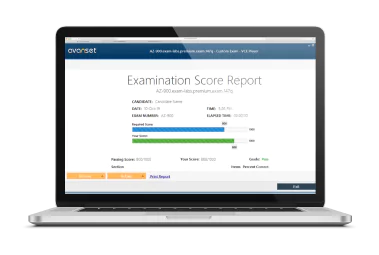
With Exam-Labs complete premium bundle you get AHA Certification Exam Practice Test Questions in VCE Format, Study Guide, Training Course and AHA Certification Practice Test Questions and Answers. If you are looking to pass your exams quickly and hassle free, you have come to the right place. AHA Exam Practice Test Questions in VCE File format are designed to help the candidates to pass the exam by using 100% Latest & Updated AHA Certification Practice Test Questions and Answers as they would in the real exam.
AHA Certifications for Health Care Operations, Facilities, Risk, and Leadership
The American Hospital Association (AHA) Certification Center administers professional certifications for people who support the operation, safety, quality, risk management, construction, materials, environmental services, and leadership needs of hospitals and health systems. These credentials are not clinical resuscitation course cards. They are role-based professional certifications for the people who keep complex health care organizations functioning safely and effectively.
That distinction matters because “AHA” can refer to more than one health-related organization in general conversation. Here, AHA refers to the American Hospital Association and its Certification Center, whose role-based portfolio includes Certified Health Care Facility Manager and other hospital-operations credentials.
The current AHA certification family includes Certified Health Care Facility Manager (CHFM), Certified Health Care Constructor (CHC), Certified Health Care Environmental Services Professional (CHESP), Certified Materials & Resources Professional (CMRP), Certified Professional in Health Care Risk Management (CPHRM), and other workforce credentials. AHA also supports leadership and health-care-mechanic certification programs. The right choice depends on the operational responsibility a professional actually holds.
CHFM validates the management of the health care physical environment
The Certified Health Care Facility Manager (CHFM) credential is designed for professionals responsible for the physical environment in hospitals and other health care facilities. A facility manager in this setting is not simply maintaining a commercial building. The role operates inside an environment where infrastructure reliability, life safety, infection prevention, regulatory compliance, clinical continuity, and patient care are tightly connected.
AHA describes five core CHFM domains: compliance; planning, design, and construction; maintenance and operations; finance; and administration. That breadth reflects the real job. A facility leader may have to interpret codes and standards, plan capital work, coordinate utility systems, manage preventive maintenance, support emergency preparedness, control budgets, supervise staff, and communicate with clinical leaders and external authorities.
The credential is therefore most relevant to experienced facilities professionals rather than to people looking for a general introduction to building maintenance. AHA’s eligibility routes combine education with years of associated engineering and health care management experience, reinforcing that CHFM is intended to validate an established professional role.
Compliance is inseparable from facility operations in health care
Hospital facilities are governed by a dense combination of codes, standards, accreditation expectations, safety requirements, and organizational policies. The facility manager must know which requirements affect the physical environment and how to turn those requirements into daily operating practice.
Compliance is not achieved by keeping a binder of standards. It has to be visible in inspection readiness, documentation, maintenance schedules, testing, corrective action, construction controls, utility management, and staff behavior. A life-safety deficiency, missed inspection, or poorly controlled construction activity can create risk far beyond the facilities department.
Strong CHFM preparation therefore treats compliance as an operating system for the facility. Candidates should practice connecting a requirement to the evidence that demonstrates it is being met and to the action required when conditions fall outside the standard.
Planning, design, and construction require health care-specific judgment
Hospitals change constantly. Clinical programs expand, equipment is replaced, patient-flow needs evolve, infrastructure ages, and regulatory expectations change. Facility managers are often involved in planning and construction long before a project reaches the maintenance phase.
Health care construction is unusually sensitive because work may occur next to active patient-care areas. Infection-control risks, noise, vibration, utility shutdowns, egress, dust, temporary barriers, security, phasing, and communication with clinical teams all have to be considered. A project that would be routine in another building type can become high risk in an occupied health care environment.
Facility leaders do not replace architects, engineers, constructors, or infection-prevention specialists. Their value is in connecting the design and construction process to the operational realities of the hospital. They understand what systems must remain available, how work affects care delivery, what maintenance access will be needed later, and how a temporary construction decision can create long-term operating consequences.
Maintenance and operations are about reliability, not just repair
A mature facilities program tries to prevent failure rather than simply respond to it. Hospitals depend on electrical distribution, emergency power, HVAC, medical-gas systems, water, vertical transportation, fire protection, building automation, and many other systems whose reliability can affect patient safety and clinical operations.
Preventive and predictive maintenance, asset information, work-order discipline, testing, spare-parts strategy, vendor management, and escalation procedures all contribute to reliability. The facility manager must also decide how limited labor and capital should be allocated across immediate defects, preventive work, aging infrastructure, and larger renewal projects.
This is where operational judgment becomes important. Not every failure has the same consequence. A small defect in a low-risk administrative area may be tolerable for a short period; a similar failure affecting an operating room, emergency department, or critical utility can require immediate action. Effective facility management connects technical condition with clinical consequence.
Finance and administration make technical priorities executable
Facility professionals often enter the field through technical disciplines, but senior responsibility requires financial and administrative competence as well. A good technical recommendation can fail if it is not translated into a credible budget, capital request, staffing plan, contract, or risk argument.
CHFM’s finance and administration domain reflects this reality. Managers need to understand operating and capital budgets, lifecycle cost, procurement, staffing, contractor performance, policy, documentation, and communication with executives. They also need to explain why infrastructure investments matter to people who may not share the same technical background.
The strongest facility leaders frame technical needs in organizational terms: patient-safety risk, service continuity, regulatory exposure, operating cost, energy use, asset life, and strategic capacity. That makes facilities management part of hospital leadership rather than a purely reactive maintenance function.
CHC focuses on the construction environment rather than facility operations
The Certified Health Care Constructor credential addresses professionals whose work is centered on planning and delivering construction in the regulated health care environment. There is overlap with CHFM because facility leaders participate in projects, but the primary responsibilities are different.
A constructor must understand how health care requirements affect project execution, including safety, infection prevention, phasing, stakeholder coordination, codes, documentation, and the realities of working around occupied clinical spaces. The credential is most useful when a professional’s day-to-day accountability is construction rather than the ongoing operation of the facility.
For candidates comparing CHC and CHFM, the deciding question should be where responsibility begins and ends. A facility manager owns ongoing performance and reliability of the environment. A constructor is focused more heavily on delivering changes to that environment safely and compliantly.
CPHRM addresses enterprise and patient-care risk from a different angle
Certified Professional in Health Care Risk Management is intended for professionals who identify, assess, and manage risk across health care organizations. Their work can involve patient safety, claims, regulatory exposure, incident analysis, enterprise risk, insurance, communication, and coordination with clinical and administrative leaders.
Risk management intersects with facilities but is broader than the physical environment. A facility failure can create a risk event, yet the risk professional may also address clinical incidents, professional liability, documentation, workplace events, privacy issues, vendor exposure, and other organizational risks.
This makes CPHRM a different career path rather than a higher or lower version of CHFM. Professionals should choose based on the function they are accountable for, not on which acronym appears more senior.
CHESP and CMRP validate specialized operational functions
Environmental services and materials management are two other hospital functions with direct consequences for safety, quality, cost, and patient experience. AHA’s CHESP credential addresses professionals responsible for the health care environment through environmental services, while CMRP focuses on materials and resource management.
Environmental services professionals operate at the intersection of cleaning science, infection prevention, staffing, workflow, quality assurance, and patient-facing operations. Materials and resource professionals manage sourcing, inventory, supply availability, vendor relationships, standardization, and the financial consequences of how supplies move through a health system.
Both roles demonstrate why the AHA certification portfolio is organized by profession. Hospitals are complex systems, and expertise in one operating function does not automatically transfer to another. Certification is most meaningful when it validates the decisions a professional actually makes.
AHA certification is different from hospital accreditation and individual licensure
A professional certification validates an individual’s knowledge and experience in a defined role. It does not accredit the hospital, license a clinical professional, approve a construction project, or replace regulatory authority.
That distinction is important in health care because many forms of authority coexist. Hospitals may be subject to federal and state requirements, accreditation, local codes, professional licensure, payer conditions, and internal credentialing. An AHA certification can demonstrate that an individual has mastered a professional body of knowledge, while the organization and the professional still have to meet the separate requirements that govern their work.
Candidates should therefore avoid treating certification as permission to perform tasks outside their role. Its value is professional competence and recognition, not a substitute for legal or organizational authority.
Testing and recertification make CHFM an ongoing professional commitment
AHA currently administers CHFM testing through PSI, with approved testing-center and live-remote options. Eligibility is based on combinations of education, associated engineering experience, health care experience, and management or administrative responsibility.
After certification, competence has to be maintained. AHA’s current CHFM recertification model uses a three-year certification period and allows renewal through qualifying continuing education or by successfully retaking the examination. That structure is appropriate for a field where codes, technology, infrastructure, safety practices, and organizational expectations change over time.
Continuing education is most useful when it follows the professional’s real responsibilities. A facility manager working through a major capital program may need deeper construction and planning education; another managing aging infrastructure may benefit more from reliability, energy, utility, or compliance development.
Choosing an AHA credential should begin with operational accountability
The AHA Certification Center serves multiple professions because hospitals depend on multiple kinds of expertise. A facility leader should look first at CHFM. A health care constructor should compare CHC. A risk professional should evaluate CPHRM. Environmental services and materials leaders have their own dedicated credentials, and other AHA workforce certifications address additional leadership and operational roles.
The useful question is not which certification is most prestigious. It is which body of knowledge matches the decisions, risks, and outcomes the professional is responsible for. When the credential aligns with the job, preparation becomes more than exam study: codes, policies, budgets, incident lessons, projects, maintenance data, and operational challenges all become part of professional learning.
The strongest certification plan therefore keeps the American Hospital Association ecosystem explicit and matches the credential to the professional's operational responsibility rather than drifting into unrelated clinical-course programs that happen to share the AHA initials.
With 100% Latest AHA Exam Practice Test Questions you don't need to waste hundreds of hours learning. AHA Certification Practice Test Questions and Answers, Training Course, Study guide from Exam-Labs provides the perfect solution to get AHA Certification Exam Practice Test Questions. So prepare for our next exam with confidence and pass quickly and confidently with our complete library of AHA Certification VCE Practice Test Questions and Answers.
AHA Certification Exam Practice Test Questions, AHA Certification Practice Test Questions and Answers
Do you have questions about our AHA certification practice test questions and answers or any of our products? If you are not clear about our AHA certification exam practice test questions, you can read the FAQ below.