Pass Scrum Certifications Exam in First Attempt Easily
Latest Scrum Certification Exam Dumps & Practice Test Questions
Accurate & Verified Answers As Experienced in the Actual Test!
Complete list of Scrum certification exam practice test questions is available on our website. You can visit our FAQ section or see the full list of Scrum certification practice test questions and answers.
- PSM I - Professional Scrum Master I
Scrum Certification Practice Test Questions, Scrum Exam Practice Test Questions
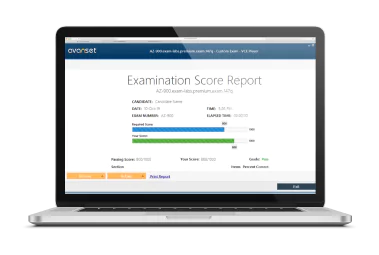
With Exam-Labs complete premium bundle you get Scrum Certification Exam Practice Test Questions in VCE Format, Study Guide, Training Course and Scrum Certification Practice Test Questions and Answers. If you are looking to pass your exams quickly and hassle free, you have come to the right place. Scrum Exam Practice Test Questions in VCE File format are designed to help the candidates to pass the exam by using 100% Latest & Updated Scrum Certification Practice Test Questions and Answers as they would in the real exam.
Scrum Alliance Certifications in 2026: CSM, CSPO, Advanced Paths and Renewal
Scrum Alliance organizes its certification program around role-based learning paths, required education, practical experience at the advanced levels, and recurring renewal through Scrum Education Units. The structure is different from assessment-only certification models: foundational credentials such as Certified ScrumMaster and Certified Scrum Product Owner are tied to approved learning experiences, while advanced and professional credentials add experience requirements and deeper role development.
Certified ScrumMaster is the foundational Scrum Alliance credential discussed here. Other current Scrum Alliance paths should be checked against the organization’s live requirements. In 2026, candidates should also note a cross-organization rule: Scrum Alliance accepts Scrum.org PSM I or PSM II as an alternative prerequisite for the A-CSM track, while the remaining course and experience requirements still apply.
CSM is the foundational Scrum Master credential
Certified ScrumMaster is designed for people who want to understand Scrum, support a Scrum Team, and develop facilitation and coaching skills. Candidates complete an approved course and then satisfy the current certification requirements. The important preparation goal is not to memorize a meeting schedule; it is to understand how a Scrum Master helps a team use empiricism, self-management, Scrum values, and continuous improvement.
The CSM exam can help organize foundational study, while the Scrum Guide remains essential for understanding the framework itself. Candidates should be able to explain the accountabilities of the Product Owner, Developers, and Scrum Master, the purpose of each event, and the relationship among artifacts and commitments.
A strong course participant brings real situations into the learning. Think about a Daily Scrum that became a manager status report, a retrospective that produces no change, a Product Owner overwhelmed by stakeholder requests, or a team that repeatedly carries unfinished work. Those situations make Scrum principles concrete.
Scrum Master development is about team effectiveness, not meeting ownership
A Scrum Master may facilitate events, but the role is broader than calendar management. Effective practitioners coach self-management, help remove impediments, improve collaboration, support the Product Owner, teach Scrum, and work with the organization when policies or structures make empirical product development difficult.
The supporting explanation of Scrum artifacts is relevant because transparency around the Product Backlog, Sprint Backlog, and Increment shapes how teams inspect progress and adapt. A Scrum Master should recognize when weak artifact transparency is causing downstream confusion.
Practice facilitation without taking over. Ask questions that help the team expose a problem, make the decision boundary visible, and create an experiment. If the Scrum Master always supplies the answer, the team may become dependent on the very person who is supposed to strengthen self-management.
A-CSM adds experience and more advanced Scrum Master capability
Advanced Certified ScrumMaster is intended for practitioners who have moved beyond introductory understanding. Scrum Alliance currently requires at least twelve months of Scrum Master work experience within the specified recent period, completion of an approved advanced course, and the other program requirements before the credential is awarded.
Advanced learning focuses on harder situations: facilitation, coaching, team dynamics, stakeholder engagement, organizational impediments, and helping teams improve when simple process reminders are no longer sufficient. Candidates should arrive with enough experience to compare techniques against real outcomes.
Keep a case journal before the course. Record difficult retrospectives, conflicts, dependencies, missed goals, stakeholder tension, and organizational policies that affected the team. For each case, note the intervention, evidence, outcome, and what you would now do differently. Those cases turn advanced education into reflection rather than repetition.
The 2026 PSM prerequisite exception creates a new route into A-CSM
In August 2026, Scrum Alliance documented an alternative prerequisite path for A-CSM. Candidates may use a Scrum.org PSM I or PSM II certification in place of the usual CSM prerequisite for this track. The exception does not remove the A-CSM course, experience, or other certification requirements.
That makes PSM I relevant to Scrum Alliance planning for the first time in a direct prerequisite sense. Candidates who already hold a Professional Scrum Master credential do not necessarily need to earn CSM before entering the advanced Scrum Alliance Scrum Master path, provided they satisfy the current A-CSM process.
Scrum.org certifications use a different administrative model, so candidates should not blur the two organizations. The new rule is a recognition of a prerequisite credential for a specific advanced track, not a merger of certification systems.
CSP-SM is built for experienced Scrum Masters
Certified Scrum Professional ScrumMaster sits above A-CSM in the Scrum Alliance Scrum Master track. Current requirements include holding A-CSM, completing approved CSP-SM education, and validating at least twenty-four months of Scrum Master experience within the specified recent period.
At this level, the useful study questions are organizational. How do multiple teams interact? What system conditions create recurring impediments? How does a Scrum Master influence managers and stakeholders without becoming a project controller? How can measures encourage learning rather than local optimization? How do coaching approaches change when the team is already technically competent?
Professional-level certification should follow meaningful responsibility. If the candidate has not yet encountered complex team dynamics, organizational constraints, or product-delivery tradeoffs, more time in practice may create greater development than immediately pursuing the next badge.
CSPO begins the product-owner certification track
Certified Scrum Product Owner is the foundational Scrum Alliance credential for product ownership. The role centers on maximizing product value, establishing direction, managing the Product Backlog, working with stakeholders and customers, and making tradeoffs about what the team should pursue next.
Product ownership is not requirements clerking. Strong Product Owners discover problems worth solving, create a coherent Product Goal, order work based on value and learning, and change direction as evidence develops. The article on adaptive customer-centered product leadership provides useful context for those responsibilities.
Preparation should use a real product case. Define target users, outcomes, assumptions, risks, a Product Goal, and a small backlog. Then introduce new evidence that forces a reprioritization. The ability to make and explain that tradeoff is more representative of product ownership than producing a perfectly formatted backlog.
A-CSPO and CSP-PO deepen product strategy and stakeholder work
The product-owner track continues from CSPO to Advanced Certified Scrum Product Owner and then Certified Scrum Professional Product Owner. A-CSPO currently requires the foundational credential, approved advanced education, and at least twelve months of product-owner experience within the specified period. CSP-PO then adds the advanced credential, further education, and at least twenty-four months of relevant experience.
Advanced product work includes stakeholder alignment, product strategy, validation of assumptions, customer discovery, backlog strategy, forecasting, and working across complex organizational conditions. Candidates should be able to explain not just what was prioritized but what evidence supported the choice and what outcome would cause it to change.
Use product experiments during preparation. Identify a risky assumption, choose the smallest useful way to test it, define evidence, and decide in advance what result would justify continuing, changing, or stopping the idea. That discipline ties Scrum product ownership to empirical product development.
Scrum Alliance renewal uses SEUs and a two-year cycle
Scrum Alliance certifications are maintained on a two-year renewal cycle. Holders earn Scrum Education Units through continued learning and complete the applicable renewal process. The number of SEUs and fee depend on the highest certification level being renewed: foundational, advanced, or professional.
This maintenance model is a deliberate contrast with lifetime credentials. It requires holders to keep learning after the course and provides a way to connect professional-development activity to continued certification status. Higher-level certification can also renew lower credentials in the same path under current rules.
Do not wait until the end of the cycle to think about SEUs. Record meaningful reading, workshops, events, volunteering, training, and other qualifying development as it occurs. More importantly, choose activities that address a real weakness in facilitation, product ownership, coaching, technical practices, leadership, or organizational change.
Scrum Alliance currently scales renewal expectations by certification level, so a practitioner who advances to an advanced or professional credential should review the requirements attached to that higher level rather than assuming the foundational renewal total still applies. This encourages a learning plan that grows with responsibility. A professional-level Scrum Master, for example, can use continuing education to deepen coaching, systems thinking, conflict navigation, and organizational design, while an experienced Product Owner can focus on discovery, strategy, evidence, and stakeholder decision-making.
A 2026 Scrum Alliance path should follow the accountability you practice
Choose CSM when the main development goal is Scrum Master capability and team effectiveness. Choose CSPO when the primary responsibility is product direction, stakeholder tradeoffs, and maximizing value. Pursuing both can broaden perspective, but neither should become a substitute for practicing the accountability on a real team.
Move to A-CSM or A-CSPO after the required experience has produced enough real cases to make advanced education useful. Move to CSP-SM or CSP-PO when responsibility is genuinely broader and the professional-level experience requirement reflects work you have performed. The progression is designed to combine education with accumulated practice.
The broader discussion of Agile and Scrum in practice is a useful closing reference. Certification can create structure, common language, and evidence of learning; professional credibility ultimately comes from helping teams and product organizations produce better outcomes under real constraints.
With 100% Latest Scrum Exam Practice Test Questions you don't need to waste hundreds of hours learning. Scrum Certification Practice Test Questions and Answers, Training Course, Study guide from Exam-Labs provides the perfect solution to get Scrum Certification Exam Practice Test Questions. So prepare for our next exam with confidence and pass quickly and confidently with our complete library of Scrum Certification VCE Practice Test Questions and Answers.
Scrum Certification Exam Practice Test Questions, Scrum Certification Practice Test Questions and Answers
Do you have questions about our Scrum certification practice test questions and answers or any of our products? If you are not clear about our Scrum certification exam practice test questions, you can read the FAQ below.