Pass Omnissa Certifications Exam in First Attempt Easily
Latest Omnissa Certification Exam Dumps & Practice Test Questions
Accurate & Verified Answers As Experienced in the Actual Test!
Complete list of Omnissa certification exam practice test questions is available on our website. You can visit our FAQ section or see the full list of Omnissa certification practice test questions and answers.
Omnissa Certification Practice Test Questions, Omnissa Exam Practice Test Questions
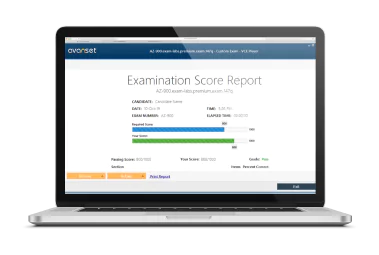
With Exam-Labs complete premium bundle you get Omnissa Certification Exam Practice Test Questions in VCE Format, Study Guide, Training Course and Omnissa Certification Practice Test Questions and Answers. If you are looking to pass your exams quickly and hassle free, you have come to the right place. Omnissa Exam Practice Test Questions in VCE File format are designed to help the candidates to pass the exam by using 100% Latest & Updated Omnissa Certification Practice Test Questions and Answers as they would in the real exam.
Omnissa Certifications in 2026: Horizon and Workspace ONE Paths
Omnissa's certification program in 2026 is the successor to the end-user computing credentials that many professionals originally encountered under VMware. Omnissa launched as an independent company on July 1, 2024 after KKR acquired the former VMware End-User Computing business from Broadcom. Horizon and Workspace ONE remain the core technology families, but the credential structure has been rebuilt around Omnissa-specific Administrator, Engineer, Design Engineer, and Platform Engineer levels.
The Omnissa certifications should therefore be read with a clear date distinction. Current candidates should use the Omnissa credential names and current exam guides, while older VMware EUC certifications remain historical records rather than the default 2026 path. Omnissa removed mandatory training prerequisites for new certifications in August 2025 and introduced new Engineer credentials in December 2025, making the current program more flexible while still emphasizing hands-on experience.
Administrator credentials establish the Horizon and Workspace ONE foundations
At Administrator level, Omnissa offers Omnissa Certified Administrator – Horizon (OCA-H) and Omnissa Certified Administrator – Workspace ONE (OCA-W). These are the starting points for professionals who operate the two main platform families and need to demonstrate reliable day-to-day administration rather than advanced troubleshooting or architecture.
For Horizon candidates, The 1H0-25 exam maps to the 2025 Omnissa Certified Administrator – Horizon examination. Preparation should cover the fundamentals of deploying and managing Horizon environments, including pools, entitlements, desktop and application delivery, connection infrastructure, user access, policies, and the operational relationships among Horizon components.
Administrator-level preparation should not become a command memorization exercise. A candidate should understand why a particular pool type is appropriate, how users receive access, what happens when authentication or brokering fails, and how changes to policies affect the user experience. The goal is dependable administration of a working environment.
Workspace ONE administration centers on unified endpoint management
OCA-W is aimed at professionals who administer Workspace ONE, particularly Workspace ONE UEM. Candidates should understand enrollment, profiles, applications, compliance, device lifecycle, identity integration, and the operational controls used to manage endpoints across multiple platforms.
Workspace ONE administration is broader than mobile-device enrollment. Modern UEM environments may include Windows, macOS, mobile operating systems, rugged devices, frontline endpoints, applications, certificates, security policies, and automation. Candidates need to understand how these parts interact rather than learning isolated console locations.
A strong lab plan uses a small set of test devices or emulators and follows them through enrollment, profile assignment, application delivery, compliance changes, remediation, and retirement. This creates the operational context needed to recognize why a policy succeeded, failed, or produced an unintended result.
Engineer credentials raise the bar from administration to troubleshooting
Omnissa Certified Engineer – Horizon (OCE-H) and Omnissa Certified Engineer – Workspace ONE (OCE-W) were introduced in December 2025. Omnissa describes the Engineer level as validating advanced troubleshooting and optimization expertise, which makes it a meaningful step beyond routine administration.
The Horizon Engineer path expects candidates to diagnose problems across the Horizon stack, including access, brokering, agents, applications, desktops, infrastructure dependencies, and user experience. The Workspace ONE Engineer path similarly moves into troubleshooting and optimization across UEM deployment, device communication, policies, applications, integrations, and operational services.
The 2W0-25 exam corresponds to the 2025 Omnissa Workspace ONE Engineer exam. Candidates should verify the current exam guide before scheduling because Omnissa has been actively refreshing its certification framework. The useful preparation principle remains stable: reproduce failures in a lab, trace symptoms across components, and practice proving root cause rather than guessing at a fix.
Design Engineer credentials focus on scale, integration, and reliability
Above Engineer level, Omnissa offers design-focused credentials for both Horizon and Workspace ONE. The company identifies them as Omnissa Certified Design Engineer – Horizon and Omnissa Certified Design Engineer – Workspace ONE. These credentials are intended for professionals who can design enterprise-scale environments rather than simply operate an existing deployment.
Design work requires different judgment from administration. A candidate must translate business requirements into capacity, availability, security, identity, network, endpoint, application, and operational decisions. There may be several technically valid designs, but the architect must explain why one choice best satisfies the stated constraints.
Horizon design preparation should include user populations, workload patterns, image strategy, application delivery, remote access, high availability, disaster recovery, cloud or on-premises placement, and infrastructure dependencies. Workspace ONE design should address tenant structure, identity, device populations, enrollment models, application distribution, compliance, integrations, regional requirements, and operational ownership.
OCPE sits at the top of the combined Omnissa platform path
Omnissa Certified Platform Engineer (OCPE) is the highest-level credential currently listed in the program. Omnissa describes it as recognition for architects who complete both Horizon and Workspace ONE tracks and can design enterprise-scale solutions across the broader digital workspace platform.
This combined requirement reflects how end-user computing has changed. Virtual desktops, physical endpoints, applications, identity, employee experience, and security increasingly intersect. An architect designing Horizon without understanding endpoint management may miss important operational dependencies, while a Workspace ONE specialist may need to understand how managed devices and identity services connect users to virtual applications and desktops.
Candidates aiming for OCPE should build cross-platform design scenarios. For example, design a workforce environment that includes managed laptops, mobile devices, virtual desktops, SaaS applications, conditional access, secure remote access, monitoring, and support workflows. The exercise should force decisions across product boundaries rather than treating Horizon and Workspace ONE as unrelated silos.
Legacy VMware and early Omnissa credentials need careful interpretation
The transition from VMware EUC to Omnissa created several layers of historical credential data. Omnissa states that historical VMware certification histories earned before the July 2024 transition remain accessible through legacy certification systems such as CertMetrics and Credly. Those records are still useful evidence of prior achievement, but they do not define the current certification structure.
Omnissa has also retired older OCAP and Specialist exams. Existing unexpired credentials may still be honored for prerequisite purposes, but new candidates should use the current OCA and OCE routes unless the live certification system explicitly directs them otherwise. This is an important distinction for anyone arriving through an old exam code, study guide, or search result.
Do not assume that a familiar VMware-era exam title has a one-to-one current replacement. Compare the old scope with the current Omnissa exam guide, identify which product capabilities have changed, and study the present platform rather than trying to reuse an obsolete blueprint.
Exam registration now runs through Clarus and Pearson VUE
Omnissa's current process uses Clarus to browse credentials, register, and manage certification histories. After registration, exams are scheduled through Pearson VUE. Omnissa currently lists certification exams at $250 USD, although candidates should confirm live pricing before purchase.
Training is recommended but no longer mandatory for new certifications. Omnissa publishes recommended courses for each credential, and those courses can cover much of the expected knowledge, but the company explicitly notes that some exam knowledge can only be gained through hands-on experience. That warning is especially relevant at Engineer and design levels.
Candidates should download the current exam guide before scheduling and confirm the credential name, version, delivery rules, and any prerequisite relationship. The Omnissa program has changed quickly since independence, so a current registration record is more reliable than an older third-party exam list.
All current Omnissa credentials use a two-year validity period
Omnissa states that its current certifications are valid for two years from the issue date. This creates a predictable renewal horizon while acknowledging that digital workspace products, operating systems, security controls, and cloud services evolve rapidly.
Professionals should track both certification expiration and product-change milestones. A Horizon administrator certified on one release may face new architecture, branding, integrations, or deployment options within the validity period. Workspace ONE professionals likewise need to keep pace with UEM platform changes, new endpoint operating systems, application-management features, security integrations, and automation.
Renewal planning should therefore be tied to actual work. If responsibilities have expanded from administration into troubleshooting, design, or cross-platform architecture, progressing to a higher-level credential may be more valuable than simply repeating the same level without broadening capability.
A 2026 Omnissa study plan should be built around real EUC workflows
Start by choosing the product family and role level that match your responsibilities. Horizon administrators should build a functioning lab and practice the complete lifecycle from deployment through entitlement and support. Workspace ONE candidates should manage devices through enrollment, policy, application, compliance, troubleshooting, and retirement. Engineer candidates should deliberately break those workflows and prove root cause.
For design-level preparation, work from requirements rather than from product menus. Define user populations, service levels, network and identity constraints, endpoint types, application needs, security controls, regional requirements, and support responsibilities. Then create a design and defend the tradeoffs. This is the kind of reasoning that separates an architect from someone who only knows where a setting appears in a console.
Omnissa's certification program now has a coherent role ladder across Horizon and Workspace ONE. The best 2026 path is to ignore outdated VMware-era assumptions, use the live Omnissa credential structure, and build enough hands-on experience that the certification reflects how you can operate, troubleshoot, and design a modern digital workspace.
Version alignment deserves a final check before scheduling. Horizon, Workspace ONE, identity integrations, and endpoint platforms can change faster than third-party notes, so candidates should match the exam guide to the product versions in their lab and document where their environment differs. Troubleshooting practice is more valuable when those differences are understood rather than silently treated as errors.
With 100% Latest Omnissa Exam Practice Test Questions you don't need to waste hundreds of hours learning. Omnissa Certification Practice Test Questions and Answers, Training Course, Study guide from Exam-Labs provides the perfect solution to get Omnissa Certification Exam Practice Test Questions. So prepare for our next exam with confidence and pass quickly and confidently with our complete library of Omnissa Certification VCE Practice Test Questions and Answers.
Omnissa Certification Exam Practice Test Questions, Omnissa Certification Practice Test Questions and Answers
Do you have questions about our Omnissa certification practice test questions and answers or any of our products? If you are not clear about our Omnissa certification exam practice test questions, you can read the FAQ below.