Pass AACE Certifications Exam in First Attempt Easily
Latest AACE Certification Exam Dumps & Practice Test Questions
Accurate & Verified Answers As Experienced in the Actual Test!
- CCP-AACE - Certified Cost Professional
Complete list of AACE certification exam practice test questions is available on our website. You can visit our FAQ section or see the full list of AACE certification practice test questions and answers.
AACE Certification Practice Test Questions, AACE Exam Practice Test Questions
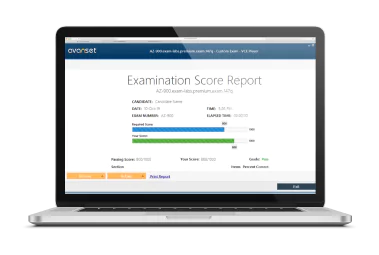
With Exam-Labs complete premium bundle you get AACE Certification Exam Practice Test Questions in VCE Format, Study Guide, Training Course and AACE Certification Practice Test Questions and Answers. If you are looking to pass your exams quickly and hassle free, you have come to the right place. AACE Exam Practice Test Questions in VCE File format are designed to help the candidates to pass the exam by using 100% Latest & Updated AACE Certification Practice Test Questions and Answers as they would in the real exam.
AACE International Certifications for Cost and Project Controls Professionals
AACE International certifications are built around total cost management: the disciplines used to estimate, plan, schedule, control, forecast, and evaluate the cost and performance of projects and assets. That makes the AACE portfolio particularly relevant to cost engineers, estimators, schedulers, project controls specialists, risk professionals, claims practitioners, and managers working in capital-intensive industries.
The certification program is not a single ladder in which every candidate starts with the same credential and advances through identical steps. AACE separates credentials by professional level and specialty. Technician certifications recognize developing practitioners, professional certifications validate established competence in defined project-controls disciplines, and expertise-level credentials address advanced forensic or decision-risk work. The right certification therefore depends on both experience and job function.
This structure is important because “project controls” is itself a collection of connected disciplines. Estimating determines likely cost before and during execution. Scheduling represents time, sequence, and dependencies. Cost control compares actual and forecast performance against the approved plan. Risk analysis tests uncertainty around those plans. Claims and forensic schedule work examine what happened when projects diverged from expectations. AACE credentials reflect those differences rather than treating the entire field as one body of knowledge.
Technician credentials establish an early-career foundation
AACE currently places the Certified Cost Technician (CCT) and Certified Scheduling Technician (CST) at the technician level. These certifications are designed for professionals who are developing formal competence in cost or schedule work and may not yet meet the experience requirements associated with the professional-level credentials.
The distinction between CCT and CST is meaningful. Cost technicians need to understand how estimates, budgets, cost accounts, progress, and forecasts are constructed and interpreted. Scheduling technicians focus more heavily on activity logic, durations, calendars, critical-path behavior, progress updating, and the relationship between the schedule and the work it represents.
In practice, the two areas interact constantly. A schedule determines when labor, equipment, and materials are expected to be used; cost information helps the project team understand whether that planned sequence is financially realistic. Even so, candidates benefit from learning one discipline deeply enough to understand its methods rather than treating project controls as a generic collection of reports.
For early-career professionals, technician certification can also make later specialization easier. A practitioner who learns the mechanics of a credible schedule, for example, is better prepared to understand schedule risk or delay analysis later. A practitioner who learns cost classification and forecasting is better prepared for broader cost-engineering responsibilities.
Certified Cost Professional is a broad professional credential
The Certified Cost Professional (CCP) is one of AACE’s central professional certifications. It addresses a wider cost-engineering and total-cost-management scope than a narrow estimating or scheduling credential. That breadth makes it relevant to experienced professionals whose responsibilities cross estimating, planning, cost control, performance measurement, forecasting, and decision support.
For experienced practitioners with broad cost-engineering responsibilities, the Certified Cost Professional (CCP) is AACE’s central professional credential. AACE’s current eligibility model requires substantial relevant professional experience, with a degree-and-experience pathway available to candidates with qualifying education. The credential is therefore intended to validate established professional capability rather than serve as an entry-level introduction to project controls.
CCP preparation should be grounded in how cost information is used to make decisions. It is not enough to recognize terminology. A professional should understand why an estimate changes as scope matures, how a control baseline differs from an early estimate, what a forecast is trying to predict, how progress affects cost and schedule performance, and how uncertainty should be represented when management commits capital.
AACE also places professional ethics and disciplined practice around the technical methods. Cost and schedule information can affect major investment decisions, contract positions, performance assessments, and claims. A technically sophisticated analysis is not useful if assumptions are hidden, data quality is poor, or the result is communicated as more certain than the evidence supports.
A dated 2026 CCP transition needs to be understood correctly
CCP has an unusual current-status note in September 2026. AACE temporarily suspended exam delivery and subsequently announced that CCP applications reopened on September 17, 2026, with exam delivery scheduled to resume on October 1, 2026. As of September 26, 2026, applications are open, but the resumed delivery date is still a few days away.
That distinction matters because a certification can remain fully current even while its exam administration is temporarily paused. The correct interpretation is not that CCP was retired or replaced. AACE continues to list CCP as a current professional certification, and the September/October change concerns the administration of the exam.
Candidates reading older material should therefore check AACE’s current scheduling notices before making test plans. Operational details such as appointment availability, delivery procedures, or application steps can change more quickly than the body of knowledge itself.
AACE professional certifications allow targeted specialization
Beyond CCP, AACE’s current professional-level portfolio includes the Certified Estimating Professional (CEP), Earned Value Professional (EVP), Planning & Scheduling Professional (PSP), and Project Risk Management Professional (PRMP). These credentials make the portfolio useful to specialists who need validation in a particular project-controls discipline rather than the broader CCP scope.
CEP is centered on estimating. Strong estimating practice involves much more than producing a number. The estimator needs to understand scope maturity, quantity development, pricing sources, productivity assumptions, indirect costs, escalation, contingency, estimate classification, and the uncertainty associated with incomplete information. A reliable estimate communicates both expected cost and the basis on which that expectation was built.
EVP focuses on earned value and integrated performance measurement. Earned value methods connect planned work, completed work, and actual cost so that the project team can evaluate performance consistently. The difficulty lies not in calculating isolated indices but in maintaining a credible performance-measurement baseline and interpreting what deviations actually mean.
PSP concentrates on planning and scheduling. Professional scheduling requires activity logic that represents the real work, realistic calendars and durations, disciplined progress updates, and the ability to distinguish true critical-path effects from superficial schedule movement. Schedulers also need to communicate consequences to people who may never inspect the underlying network logic.
PRMP addresses project risk management. Risk work is not a one-time register of possible problems. It involves identifying uncertainty, analyzing likelihood and consequence, developing responses, assigning ownership, and updating the assessment as the project changes. Quantitative schedule or cost risk methods can add depth when decisions require an understanding of ranges rather than single deterministic outcomes.
Expertise credentials address disputes and advanced risk analysis
AACE’s expertise-level credentials include the Certified Forensic Claims Consultant (CFCC) and Decision and Risk Management Professional (DRMP). These sit in areas where the professional must combine technical analysis with mature judgment and communication.
Forensic claims work can involve reconstructing project events, assessing delay, evaluating causation, examining cost impacts, and presenting conclusions in contractual or dispute settings. The quality of the analysis depends on contemporaneous records, a defensible method, and careful separation of fact, assumption, and opinion. That is different from routine project controls, even though it relies on many of the same cost and schedule foundations.
Decision and risk work similarly goes beyond maintaining a standard project risk register. Senior risk professionals may need to structure uncertain decisions, compare alternatives, model ranges, examine correlations, and communicate why a choice remains reasonable even when outcomes cannot be predicted with certainty.
These expertise credentials are therefore more appropriate to practitioners whose roles already demand advanced analysis. Pursuing them before developing strong fundamentals in estimating, scheduling, cost control, and risk reasoning would reverse the natural order of professional development.
Total cost management connects the certification families
What makes AACE’s portfolio coherent is the total cost management perspective. A project estimate, schedule, risk model, cost report, and claim analysis are not independent products. They are different views of the same investment and the work required to deliver it.
Consider a major capital project. The initial estimate depends on scope assumptions and an expected execution strategy. The schedule translates that strategy into time and sequence. Risk analysis tests uncertainty around cost and duration. During execution, progress and actual cost are compared with the plan. Forecasting estimates where the project is likely to finish. If a major disruption occurs, the same records may later be used to evaluate entitlement, delay, or damages.
A practitioner who understands those connections is more valuable than one who can operate a single software tool without understanding the underlying management problem. AACE certification is strongest when it validates that kind of reasoning.
Experience requirements are part of the credential design
AACE professional certifications generally expect meaningful experience because the underlying judgments develop through project exposure. A schedule network can be taught in a classroom, but deciding whether the logic actually represents construction or engineering work requires understanding how projects are executed. Cost forecasting can be explained mathematically, but recognizing an unrealistic forecast often depends on experience with productivity, commitments, change, and remaining scope.
The CCP eligibility structure illustrates this clearly. AACE recognizes both an experience-only route and a route that combines relevant education with professional experience. That approach acknowledges formal education while preserving the expectation that a professional credential represents applied capability.
Candidates should document their experience carefully and compare it with the current certification handbook before applying. Job titles alone are not a reliable indicator. Two “project controls engineers” can perform very different work depending on industry, organization, and project phase.
Recertification keeps the credential connected to current practice
AACE certifications are not intended to be permanent evidence of a one-time exam result. AACE uses a recurring recertification cycle, with current material describing a three-year period. That matters in a field where methods, software, standards, contracting practices, and industry expectations evolve.
Continuing professional development can include education, professional activity, and other qualifying work under AACE’s published rules. The purpose is not simply administrative renewal. A credential should continue to represent an active professional who is engaged with the discipline.
Candidates should treat recertification requirements as part of the decision to pursue a credential, especially if they hold or plan to hold several designations. Maintaining multiple certifications can be worthwhile when each corresponds to real professional responsibilities, but collecting overlapping credentials without using the knowledge can create maintenance work without equivalent career value.
Choosing the right AACE certification
The best choice begins with the work the candidate is accountable for. Someone building cost and estimating competence early in a career may fit CCT. A developing scheduler may fit CST. An experienced cost engineer with broad project-controls responsibility may target CCP. A specialist estimator may prefer CEP, while a scheduler with deeper professional experience may choose PSP. Professionals whose day-to-day work is centered on earned value or project risk have corresponding professional credentials.
The expertise credentials make sense when the role has already moved into advanced claims, forensic, decision, or risk work. They should represent a genuine specialization, not merely the next item in a sequence.
Industry context also matters. AACE methods are widely applicable across construction, engineering, energy, infrastructure, manufacturing, and other capital-project environments, but the way a method is implemented can vary. A scheduler on a process plant project faces different execution logic from a scheduler on a software implementation; a cost engineer on a megaproject may manage a very different control structure from one supporting smaller recurring capital work.
AACE certification is therefore most useful when candidates combine the published body of knowledge with the realities of their own projects. The credential can validate methods and professional standards, but its long-term value comes from using those methods to produce estimates, schedules, forecasts, risk analyses, and decisions that project teams can trust.
With 100% Latest AACE Exam Practice Test Questions you don't need to waste hundreds of hours learning. AACE Certification Practice Test Questions and Answers, Training Course, Study guide from Exam-Labs provides the perfect solution to get AACE Certification Exam Practice Test Questions. So prepare for our next exam with confidence and pass quickly and confidently with our complete library of AACE Certification VCE Practice Test Questions and Answers.
AACE Certification Exam Practice Test Questions, AACE Certification Practice Test Questions and Answers
Do you have questions about our AACE certification practice test questions and answers or any of our products? If you are not clear about our AACE certification exam practice test questions, you can read the FAQ below.